
|
|
|
Ealing North


|

|
Harry Greenway
|

|
20,744
|

|
29,904
|

|
3,887
|

|
0
|

|
1,191
|

|
|
|
|

|

|
Ealing North
|

|
29,917
|

|
20,842
|

|
6,266
|

|
0
|

|
1,175
|
|
|
Conservative
|
|
In London, there has in recent years been a stronger connection between events in local government and parliamentary election results than is common in the recent of the country.
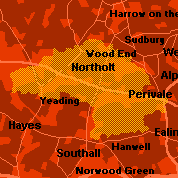
This certainly seems true in the case of the Ealing North seat. Traditionally this northern part of the west London borough, covering neighbourhoods like Greenford, Perivale and Northwood, was a Conservative marginal that Labour could win in good years. Then in 1987 the Conservative MP here, Harry Greenway, suddenly increased his majority from 6,000 to 15,000 at a time when nationally there was a swing away from the Conservatives. This seems to be largely due to the election of a Labour-controlled council in Ealing borough in May 1986, which subsequently led to a large and unpopular rate (local government tax) rise. In May 1990 the Labour-dominated council was ousted after one four-year term - and then in the 1992 general election, Greenway's majority plummeted back down to 6,000. A temporary aberration based on local government politics had been restored.
Labour will find it hard actually to win Ealing North in 1997, as there have been boundary changes consequent of the breaking-up of another seat in the borough (Acton), which have brought in the strongest Tory ward in the whole of Ealing, Pitshanger. This will add about 3,000 votes to Greenway's effective majority in north, and Labour will require a landslide 8 per cent swing to take it.
|
|
|

|

|

|

|

|

|
|

|
3,135
|
7.19
|
9.03
|
80
|
|

|
1,111
|
2.55
|
11.17
|
23
|
|

|
5,385
|
12.35
|
11.25
|
110
|
|

|
1,090
|
2.50
|
14.70
|
17
|
|

|
19,780
|
45.35
|
10.45
|
434
|
|

|
0
|
0.00
|
2.81
|
0
|
|

|
2,141
|
4.91
|
8.01
|
61
|
|

|
2,362
|
5.42
|
15.25
|
36
|
|

|
3,596
|
8.25
|
7.13
|
116
|
|

|
5,013
|
11.49
|
10.17
|
113
|
|
|
