
|
|
|
Milton Keynes South West


|

|
Barry Legg
|

|
17,006
|

|
27,298
|

|
6,065
|

|
0
|

|
389
|

|
|
|
|

|

|
Milton Keynes SW
|

|
23,840
|

|
19,153
|

|
7,429
|

|
0
|

|
727
|
|
|
Conservative
|
|
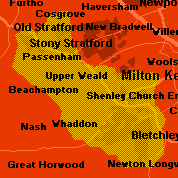
Milton Keynes (Buckinghamshire) is unique. There have officially been New Towns in the United Kingdom since the 1940s, but only one New City. Designated in 1967, long after the bulk of the communities created or expanded by the New Town movement, Milton Keynes was the most ambitious venture of all. By 1991 the population was 173,000, up 50,000 in the previous decade, the fastest expansion of any town or city in Britain. The local economy and landscape has been transformed - how successfully is a matter of widely varying opinion.
Like most of the southern New Towns, Milton Keynes supported the Conservatives in Mrs Thatcher's heyday in the early 1980s. When the population increase alluded to above caused the Boundary Commission to split the seat into two before the 1992 election, it was felt that the South West constituency would be the more marginal, and so it proved, with Labour trailing the Conservative, Barry Legg, by 4,687 votes. This gap would be wiped out by a swing of 5 per cent; this would happen in a very good year for Labour - but only in a very good year.
|
|
|

|

|

|

|

|

|
|

|
1,464
|
3.41
|
9.03
|
38
|
|

|
1,391
|
3.24
|
11.17
|
29
|
|

|
4,464
|
10.38
|
11.25
|
92
|
|

|
18,941
|
44.05
|
14.70
|
300
|
|

|
4,056
|
9.43
|
10.45
|
90
|
|

|
100
|
0.23
|
2.81
|
8
|
|

|
1,886
|
4.39
|
8.01
|
55
|
|

|
3,245
|
7.55
|
15.25
|
50
|
|

|
3,140
|
7.30
|
7.13
|
102
|
|

|
4,249
|
9.88
|
10.17
|
97
|
|
|
