
|
|
|
Dunfermline West


|

|
gain
from Labour
|

|
Rachel Squire
|

|
0 ( 0.0%)
|

|
4,606 (12.6%)
|

|
19,338 (53.1%)
|

|
4,963 (13.6%)
|

|
6,984 (19.2%)
|

|
543 ( 1.5%)
|

|
|

|
52,467
|

|
36,434 (69.4%)
|


|
Rachel Squire
|

|
Dunfermline West
|

|
7,184 (18.5%)
|

|
8,948 (23.0%)
|

|
16,132 (41.5%)
|

|
6,066 (15.6%)
|

|
7,703 (19.8%)
|

|
0 ( 0.0%)
|
|
|
Labour
|

|
51,187
|

|
38,849 (75.9%)
|
|


|
-10.4%
|

|
+11.6%
|

|
-2.0%
|

|
-0.7%
|

|
+1.5%
|

|
+2.5%
|

|
-6.5%
|
|

|
|
|
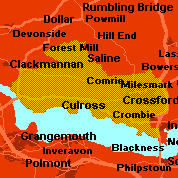
The town of Dunfermline, which lacks the gritty air of some more traditionally industrial Scottish towns, is held by Labour, but with a far lower share of the vote than in many Central Scottish seats. The constituency does include some small industrial towns on the shores of the Firth of Forth, such as Culrose and Kincardine, but Dunfermline itself, a former capital of Scotland, dominates. Despite the fact that Labour's Rachel Squire only won 42 per cent of the votes in 1992, the fact that the other three candidates each gained over 15 per cent must leave Labour feeling essentially secure in 1997. Boundary changes are slight.
|
|

|

|

|

|

|
|

|
2,293
|
7.93
|
9.03
|
88
|
|

|
230
|
0.79
|
11.17
|
7
|
|

|
1,976
|
6.83
|
11.25
|
61
|
|

|
8,879
|
30.69
|
14.70
|
209
|
|

|
1,064
|
3.68
|
10.45
|
35
|
|

|
318
|
1.10
|
2.81
|
39
|
|

|
2,244
|
7.76
|
8.01
|
97
|
|

|
6,046
|
20.90
|
15.25
|
137
|
|

|
2,244
|
7.76
|
7.13
|
109
|
|

|
3,637
|
12.57
|
10.17
|
124
|
|
|

