
|
|
|
Edinburgh Pentlands


|

|
gain
from Conservative
|

|
Malcolm Rifkind
|

|
0 ( 0.0%)
|

|
14,813 (32.4%)
|

|
19,675 (43.0%)
|

|
4,575 (10.0%)
|

|
5,952 (13.0%)
|

|
727 ( 1.6%)
|

|
|

|
59,635
|

|
45,742 (76.7%)
|


|
Malcolm Rifkind
|

|
Edinburgh Pentlands
|

|
4,148 ( 9.0%)
|

|
18,474 (40.2%)
|

|
14,326 (31.2%)
|

|
5,828 (12.7%)
|

|
7,203 (15.7%)
|

|
127 ( 0.3%)
|
|
|
Conservative
|

|
59,432
|

|
45,958 (77.3%)
|
|


|
-7.8%
|

|
+11.8%
|

|
-2.7%
|

|
-2.7%
|

|
+1.3%
|

|
+0.3%
|

|
-0.6%
|
|

|
|
|
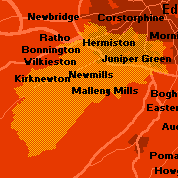
Unless something quite remarkable happens, the most senior government minister vulnerable to a Labour advance at the next Election is the Foreign Secretary, Malcolm Rifkind. In 1992 he won Edinburgh Pentlands by only just over 4,000 votes, and in a little changed seat he would lose on a swing to Labour of only 5 per cent.
However, this might be slightly deceptive. Not only have Labour already come closer to maximising their support in Scotland than in England; but the nature of the Pentlands seat suggests that it might be less subject to large swings than most others.
Pentlands is situated in the outer south-western sector of Scotland's capital. It consists of a dramatically contrasting mixture of neighbourhoods, from the extremely Conservative areas of Colinton, Fairmilehead, and Currie and Balerno to the Labour-supporting massive council estates such as Wester Hailes. Both sides of the seat have shown a resistance to political change at both parliamentary and local level. The Conservative parts of the seat may well keep Rifkind in the Commons for another term, even if his government is swept from office.
|
|
|

|

|

|

|

|

|
|

|
7,018
|
22.63
|
9.03
|
251
|
|

|
2,239
|
7.22
|
11.17
|
65
|
|

|
1,816
|
5.85
|
11.25
|
52
|
|

|
5,822
|
18.77
|
14.70
|
128
|
|

|
1,383
|
4.46
|
10.45
|
43
|
|

|
104
|
0.34
|
2.81
|
12
|
|

|
1,737
|
5.60
|
8.01
|
70
|
|

|
2,755
|
8.88
|
15.25
|
58
|
|

|
1,614
|
5.20
|
7.13
|
73
|
|

|
6,530
|
21.05
|
10.17
|
207
|
|
|
