
|
|
|
Tooting


|

|
Lab gain
from Labour
|

|
Tom Cox
|

|
0 ( 0.0%)
|

|
12,505 (27.1%)
|

|
27,516 (59.7%)
|

|
4,320 ( 9.4%)
|

|
0 ( 0.0%)
|

|
1,764 ( 3.8%)
|

|
Lab
|

|
66,653
|

|
46,105 (69.2%)
|


|
Tom Cox
|

|
Tooting
|

|
4,107 ( 8.0%)
|

|
20,494 (40.1%)
|

|
24,601 (48.2%)
|

|
3,776 ( 7.4%)
|

|
0 ( 0.0%)
|

|
2,217 ( 4.3%)
|
|
|
Labour
|

|
67,218
|

|
51,088 (76.0%)
|
|


|
-13.0%
|

|
+11.5%
|

|
+2.0%
|

|
+0.0%
|

|
-0.5%
|

|
-0.8%
|

|
-6.8%
|
|

|
|
|
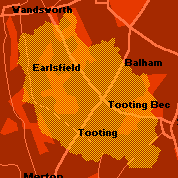
Tooting seems to have resisted the blandishments of the Conservative Party in a way that the other two constituencies in the borough of Wandsworth have not. While Battersea and Putney have swung steadily to the right in each of the last three elections, the Labour majority in Tooting, having reached a precarious 1,400 in 1987, jumped to over 4,000 in 1992.
This may be partly explained by the ethnic make-up. Overall the Tooting division has risen from 21 per cent to over 26 per cent ethnic minority population in the 1980s, at a time when the proportion in Battersea actually fell. The wards of Graveney, and Tooting itself, were around 37 per cent non-white around the time of the 1991 Census. Also while the percentage of owner-occupiers has risen over the decade and that of council tenants fallen, this has been in line with the national average rather than far exceeding it as in the rest of Wandsworth. In short, Tooting has not gentrified and moved up the social scale as much as Battersea and Putney have.
It would seem that Labour has passed its lowest point in Tooting and may expect to hold on next time. There are no boundary changes to cloud the picture in the London borough of Wandsworth.
|
|
|

|

|

|

|

|

|
|

|
1,313
|
3.75
|
9.03
|
42
|
|

|
156
|
0.45
|
11.17
|
4
|
|

|
330
|
0.94
|
11.25
|
8
|
|

|
253
|
0.72
|
14.70
|
5
|
|

|
27,056
|
77.32
|
10.45
|
740
|
|

|
0
|
0.00
|
2.81
|
0
|
|

|
409
|
1.17
|
8.01
|
15
|
|

|
0
|
0.00
|
15.25
|
0
|
|

|
689
|
1.97
|
7.13
|
28
|
|

|
4,119
|
11.77
|
10.17
|
116
|
|
|
