
|
|
|
Sheffield Hallam


|

|
gain
from Conservative
|

|
Irvine Patnick
|

|
0 ( 0.0%)
|

|
15,074 (33.1%)
|

|
6,147 (13.5%)
|

|
23,345 (51.3%)
|

|
0 ( 0.0%)
|

|
913 ( 2.0%)
|

|
|

|
62,834
|

|
45,479 (72.4%)
|


|
Irvine Patnick
|

|
Sheffield Hallam
|

|
8,440 (18.9%)
|

|
22,180 (49.6%)
|

|
8,246 (18.4%)
|

|
13,740 (30.7%)
|

|
0 ( 0.0%)
|

|
546 ( 1.2%)
|
|
|
Conservative
|

|
61,133
|

|
44,712 (73.1%)
|
|


|
-16.5%
|

|
-4.9%
|

|
+20.6%
|

|
+0.0%
|

|
+0.8%
|

|
+2.8%
|

|
-0.8%
|
|

|
|
|
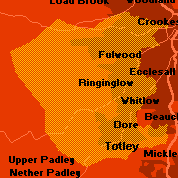
Many people regard Sheffield, in South Yorkshire, as the archetype of an industrial and working-class city. Indeed it does have vast neighbourhoods of poor housing, and zones of multiple social deprivation. However, it also has an outstandingly attractive and substantial middle-class residential area in the south-west of the city, out towards the Peak District National Park. This is the Hallam constituency.
The solid stone-built mansions on these leafy hills, in favoured residential areas like Ecclesall and Fulwood and Dore, look as if they belong to a safe Conservative seat. Indeed, this is what Hallam has been until the recent past, as the only Tory division in the 'Socialist Republic of South Yorkshire'. However, the Liberal Democrats have been picking up seats in local elections, and are confident of being able to take Hallam in 1997. We shall see; one of the three most middle-class seats in the country might actually prove a hard nut to crack.
|
|
|

|

|

|

|

|

|
|

|
10,041
|
32.23
|
9.03
|
357
|
|

|
7,869
|
25.26
|
11.17
|
226
|
|

|
2,701
|
8.67
|
11.25
|
77
|
|

|
105
|
0.34
|
14.70
|
2
|
|

|
4,700
|
15.08
|
10.45
|
144
|
|

|
83
|
0.27
|
2.81
|
9
|
|

|
1,963
|
6.30
|
8.01
|
79
|
|

|
2,155
|
6.92
|
15.25
|
45
|
|

|
190
|
0.61
|
7.13
|
9
|
|

|
590
|
1.89
|
10.17
|
19
|
|
|
