
|
|
|
Stirling


|

|
gain
from Conservative
|

|
Michael Forsyth
|

|
0 ( 0.0%)
|

|
13,971 (32.5%)
|

|
20,382 (47.4%)
|

|
2,675 ( 6.2%)
|

|
5,752 (13.4%)
|

|
178 ( 0.4%)
|

|
|

|
52,491
|

|
42,958 (81.8%)
|


|
Michael Forsyth
|

|
Stirling
|

|
236 ( 0.6%)
|

|
16,607 (39.2%)
|

|
16,371 (38.6%)
|

|
2,854 ( 6.7%)
|

|
6,145 (14.5%)
|

|
410 ( 1.0%)
|
|
|
Conservative
|

|
51,902
|

|
42,387 (81.7%)
|
|


|
-6.7%
|

|
+8.8%
|

|
-0.5%
|

|
-1.1%
|

|
-0.6%
|

|
+1.1%
|

|
+0.2%
|
|

|
|
|
There are three Cabinet Ministers who sit for Scottish seats, and all are at risk of losing their seat in the Commons at the next election: Malcolm Rifkind in Edinburgh Pentlands, Ian Lang in Galloway, and most vulnerable of all, Michael Forsyth, the Scottish Secretary, in Stirling.
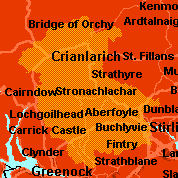
It was quite a feat for Forsyth to retain Stirling in 1992, which he did with a margin of 703. This was his second successive win by under a thousand, as his majority had been only 548 in 1987. Stirling does have some attractive countryside up around the Trossachs and some middle-class residential areas like Dunblane, but Stirling itself as in most Scottish towns of any size has a high proportion of council housing and working-class residents who are inclined not to support the rigorous form of Conservatism adopted by Mr Forsyth.
He will have an even more difficult task next time, not just because of the parlous state of his Government, but because boundary changes remove one of the most Conservative areas from the constituency. After two Houdini acts, the talented Mr Forsyth may well be looking for another seat soon.
|
|
|

|

|

|

|

|

|
|

|
4,596
|
16.04
|
9.03
|
178
|
|

|
1,943
|
6.78
|
11.17
|
61
|
|

|
1,680
|
5.86
|
11.25
|
52
|
|

|
2,506
|
8.75
|
14.70
|
59
|
|

|
1,749
|
6.10
|
10.45
|
58
|
|

|
2,757
|
9.62
|
2.81
|
342
|
|

|
2,231
|
7.79
|
8.01
|
97
|
|

|
6,864
|
23.96
|
15.25
|
157
|
|

|
1,123
|
3.92
|
7.13
|
55
|
|

|
3,204
|
11.18
|
10.17
|
110
|
|
|
