
|
|
|
Swindon South


|

|
gain
from Conservative
|

|
Simon Coombs
|

|
0 ( 0.0%)
|

|
18,298 (35.8%)
|

|
23,943 (46.8%)
|

|
7,371 (14.4%)
|

|
0 ( 0.0%)
|

|
1,550 ( 3.0%)
|

|
|

|
70,207
|

|
51,162 (72.9%)
|


|
Simon Coombs
|

|
Swindon
|

|
10,103 (18.1%)
|

|
27,312 (48.9%)
|

|
17,209 (30.8%)
|

|
10,439 (18.7%)
|

|
0 ( 0.0%)
|

|
842 ( 1.5%)
|
|
|
Conservative
|

|
68,197
|

|
55,802 (81.8%)
|
|


|
-13.2%
|

|
+16.0%
|

|
-4.3%
|

|
+0.0%
|

|
+1.5%
|

|
+2.9%
|

|
-9.0%
|
|

|
|
|
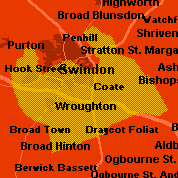
When the marginal seat of Swindon was divided by the Boundary Commission in 1995, each half was diluted with some rural territory outside the Wiltshire town itself. This sounded like good news for the Conservatives, who had held the unified seat by only 2,800 votes in 1992.
Indeed it is, at least as far as South Swindon is concerned, for this new division now includes not only some affluent villages and the small town of Wroughton heading towards the Downs, but also the more Tory southern part of Swindon itself, such as the Lawns ward in the old town, and the burgeoning new private estates of the wards of Toothill and Freshbrook, where the population grew by nearly 20,000 in the 1980s.
The rapidly growing and now modern town of Swindon deserves to form the core of two parliamentary seats. It is likely that one of these will be represented by Labour, and the other - South Swindon - by the Conservatives.
|
|
|

|

|

|

|

|

|
|

|
5,011
|
12.60
|
9.03
|
139
|
|

|
2,430
|
6.11
|
11.17
|
55
|
|

|
2,079
|
5.23
|
11.25
|
46
|
|

|
11,694
|
29.39
|
14.70
|
200
|
|

|
4,393
|
11.04
|
10.45
|
106
|
|

|
127
|
0.32
|
2.81
|
11
|
|

|
5,366
|
13.49
|
8.01
|
168
|
|

|
3,686
|
9.26
|
15.25
|
61
|
|

|
4,289
|
10.78
|
7.13
|
151
|
|

|
395
|
0.99
|
10.17
|
10
|
|
|
