
|
|
|
Carlisle


|

|
Eric Martlew
|

|
12,641
|

|
25,031
|

|
4,576
|

|
0
|

|
126
|

|
|
|
|

|

|
Carlisle
|

|
19,746
|

|
21,667
|

|
6,232
|

|
0
|

|
230
|
|
|
Labour
|
|
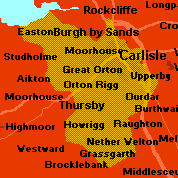
Labour have not lost the Carlisle constituency since 1964, but it should still be classed as a marginal. There are two reasons for this. One is that it is a somewhat unusual, even eccentric seat. Like Barrow in Furness at the other end of Cumbria, Carlisle is a rather working-class and industrial town tucked away in predominantly rural and remote countryside. It has a number of claims to uniqueness, one of which was that its pubs were run by the state, by special ordinance, as late as the 1970s.
A second reason to see Carlisle as potentially marginal is to do with boundary changes. In the 1980s the constituency remained as a compact urban core, as the Boundary Commission refrained from bringing its electorate up to the average for England by adding rural wards from the area surrounding, which now fell under the jurisdiction of Carlisle City Council. Labour must have been truly grateful for this as they held on by just 71 votes in 1983 and by only 916 in 1987.
On the new boundaries to be adopted in Carlisle for the first time in 1997 Labour would have lost both those contests. The area of the seat is tripled as 5,000 voters are brought in from three wards previously in Penrith and the Border. The effect is to reduce the Labour majority by about a thousand, from 3,000 to 2,000. Labour should still win, given a favourable national swing, but the loyalties of the larger Carlisle cannot be taken absolutely for granted.
|
|
|

|

|

|

|

|

|
|

|
965
|
2.79
|
9.03
|
31
|
|

|
2,628
|
7.61
|
11.17
|
68
|
|

|
3,467
|
10.03
|
11.25
|
89
|
|

|
5,013
|
14.51
|
14.70
|
99
|
|

|
130
|
0.38
|
10.45
|
4
|
|

|
410
|
1.19
|
2.81
|
42
|
|

|
6,167
|
17.85
|
8.01
|
223
|
|

|
10,297
|
29.80
|
15.25
|
195
|
|

|
2,977
|
8.62
|
7.13
|
121
|
|

|
2,312
|
6.69
|
10.17
|
66
|
|
|
